SKU: 29982460151
macys linen dresses

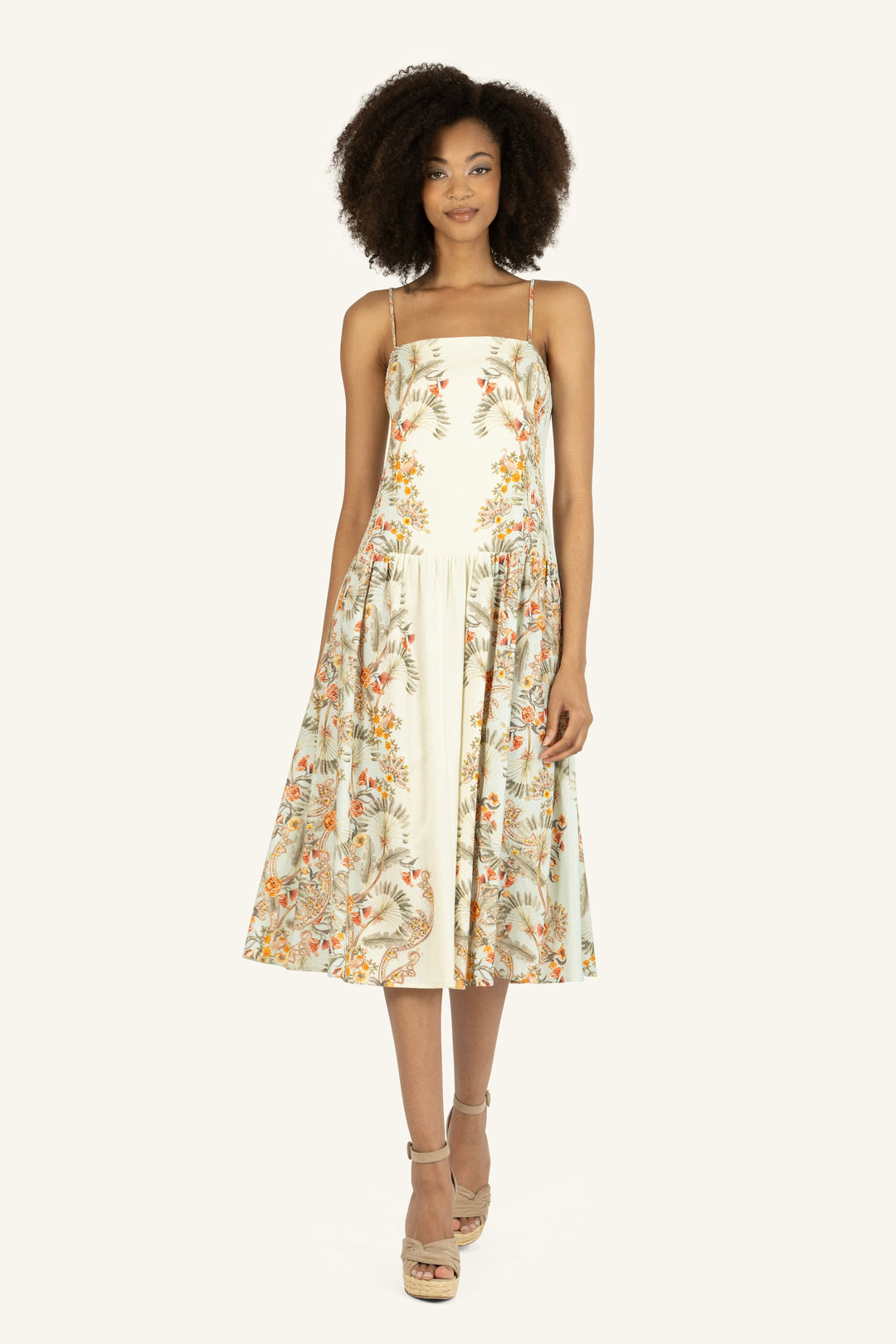
macys linen dresses Super Natural by Secret Mission Women's Suzy Dress

Sale price$25.60 Regular price$28.44
Save 10%
Size: 4

Shipping Estimate
USA
  • USA
  • CAN

Ships within 48 hours · Estimated delivery Jul 10 - Jul 15

Promo Codes Available:

For Your Every Summer RSVP, with Code: SUMMER15

Description

macys linen dresses Super Natural by Secret Mission Women's Suzy DressProduct Description: Super Natural by Secret Missions Suzy Dress is crafted from a medium weight linen blend featuring a soft, placement floral print in warm, nature inspired tones. Designed with a straight neckline and slender straps, the fitted bodice flows into a drop waist silhouette with a gently gathered skirt for an effortless, feminine shape. A contrast center panel adds visual structure, while the smocked back panel ensures comfort and

Product Description: 
Super Natural by Secret Mission’s Suzy Dress is crafted from a medium-weight linen blend featuring a soft, placement floral print in warm, nature-inspired tones. Designed with a straight neckline and slender straps, the fitted bodice flows into a drop-waist silhouette with a gently gathered skirt for an effortless, feminine shape. A contrast center panel adds visual structure, while the smocked back panel ensures comfort and flexibility. The midi length makes it an easy choice for both everyday wear and elevated occasions.

Fabric:
Linen Blend

Color:
Natural Floral Road Print

Size and Fit:
Fits true to size
Lightweight, stretchy fabric
Model is 180cm/ 5'11"" and is wearing a size S

Model measurements:
Bust: 85cm/ 33”
Waist: 64cm/ 25”
Hip: 89cm/ 35”"

Care Instructions:
· Straight neckline
· Adjustable spaghetti straps
· Fitted bodice with drop waist seam
· Gathered skirt with midi length
· Placement floral print with contrast center panel
· Concealed back zipper closure
· 15% linen / 85% viscose
· Gentle hand wash

Shipping Notes
  • Free Standard Shipping on $100+ Orders to the USA.
  • Except Preorder products are shipped in 48 hours.
  • Delivery to the USA:
  1. Standard Shipping : 3-10 business days
  • If time is of the essence, please consider selecting expedited delivery for faster service.
Exchange/Return Notes
  • We offer a 30-day return/exchange service after receiving.
  • Final sale items are not eligible for returns or exchanges.
  • To process your return/exchange, please contact us at [email protected]
  • Please click here for more details>>> Return & Exchange Policy
SKU: 29982460151

Discover Niche Categories That Outsell macys linen dresses

Top-Converting Item to Boost Your Average Order

4.3 ★★★★★
Based on 475 reviews
Sort
Highest Rating
Newest First
Oldest First
Product Reviews
J
Verified Purchase
J. Edgar
Los Angeles, US
★★★★★ 4
How many trees do we have left?
In this book, the author takes a look at the downfall of civilizations. Yes, that's plural. There are several models of how civilization is progressing. One is that we're getting better and better as time goes by. Another, less popular one states that we are actually in decline, going down from some sort of golden age. You'll find many of these proponents in the old age homes and such. For them, the only disagreement is when we are declining from. Wright takes a look at the cyclical nature of the rise and fall of civilizations, taking examples from several once- prospering civilizations. This book stands as a call to action that something must be done to grow smartly and be careful on how we allocate the scant resources we have left. While he doesn't hit an anything new, this book's strength is its concise nature. The several examples are familiar and in that have more impact. The strongest example is one he visits several times to show an analogy of current times: Easter Island. This isolated speck in the Pacific was once a thriving mini-civilization with culture and art. And a lot of trees. These trees helped the islanders fish and raise their ceremonial head sculptures. However, these trees also were a poorly cultivated resource. Someone not too long ago cut down the last tree, and the island is now a wasteland and anthropological curiosity. We are doing the same thing. How many trees do we have left to cut?
WAS THIS REVIEW HELPFUL?YesReportShare
Reviewed in the United States on October 14, 2009
W
Verified Purchase
W Lorraine Watkins
Grantham, US
★★★★★ 3
Good on Review Short on Direct Experience
It is an extensive review of the literature on rise and fall of civilizations with observations on our's. Extremely well footnoted and referenced it however suffers from the author appearing to have little direct primary experience in the study of his topic. Nonetheless there is good information here and substantiation of the notion that cultures come and go, frequently going as a result of the lack of capacity necessary to change group behavior in response to certain challenges. He presents compelling evidence that those overwhelming challenges often revolve around irrational and compulsive exploitation of natural resources. Sadly I share the author's pessimism in regard to our global culture being likely to respond adequately to the ongoing destruction of our livable earthly environment. I fear the planet is headed for a massive kill off in the disturbingly near future.
WAS THIS REVIEW HELPFUL?YesReportShare
Reviewed in the United States on April 13, 2013
P
Verified Purchase
phamv
Belleville, US
★★★★★ 5
I hate to be the kind of person preaching on Doom's ...
This is an impressive quick read. I hate to be the kind of person preaching on Doom's Day, but I do find the definition of progress to be a multi-faceted, direct correlation to humanity, or as this book challenges, inversely related. As Le Corbusier once stated in Towards a New Architecture, "[Progress is] the study of minute points pushed to its limits." I think that we forget that limits do exist. On a sustainability level, we seem to forget that growth is bound to a carrying capacity which is only a constant. We exceed limits in population, in wealth, in energy consumption, and we are doing so blindly because we believe we are progressing. This is the first that I heard the term "progress traps" (which I think Wright may have coined himself), and I believe we seem to fall under the impression that distilling or expanding our limitations is an ultimate form of progress, when in fact, its lack in sustainability will only push us back. If you have the time, it's a pretty quick and enlightening read. If you are still on the fence with the concepts discussed in the book, I recommend finding it at a local library before committing to buy. For me, I recommend it. Also, if you are interested, there is a documentary based on this book called "Surviving Progress" (2011). I prefer the book so much more, but the documentary wasn't that bad.
WAS THIS REVIEW HELPFUL?YesReportShare
Reviewed in the United States on August 29, 2015
M
Verified Purchase
MITCHELL T WEBB
Los Angeles, US
★★★★★ 5
Negro Slave Bible
I like the large print. And, I appreciate the honest commentary.
WAS THIS REVIEW HELPFUL?YesReportShare
Reviewed in the United States on May 7, 2026
J
Verified Purchase
joan williams
West Palm Beach, US
★★★★★ 5
None
Format: Paperback
Great book, very informative
WAS THIS REVIEW HELPFUL?YesReportShare
Reviewed in the United States on May 4, 2026

recommand products